

It's Not the Gap. It's the Movement.
Most discussions about implant-abutment connections focus on the microgap — the interface between implant and abutment where bacteria accumulate. And bacteria do accumulate there; that's been documented since the 1990s. But reducing this to a bacterial contamination problem misses the more important mechanism.
Hermann and colleagues demonstrated that the critical driver of crestal bone loss isn't simply the presence of a gap or even the bacteria within it. It's micromovement. When the connection flexes under occlusal load, it creates a pumping action — drawing bacteria and inflammatory mediators in and out of the interface with every bite. That dynamic movement stimulates a biologic response at the bone level. The body interprets mechanical instability as a threat and resorbs accordingly.
This reframes the entire conversation. The question isn't is there a gap? — there always is. The question is how much does the connection move under load? The answer determines your bone levels.
Connection stability is what saves the bone.
External Hex: A Brief Note
External hex connections belong to a prior era of implant dentistry. The flat butt-joint design, with its short vertical wall height and high micromovement under lateral load, is associated with significant crestal bone loss — particularly when placed subcrestally, where the movement is amplified and the inflammatory response is initiated deep to the crest (Koutouzis, 2019). Screw loosening is common. The connection is mechanically unstable by design.
Nobody placing implants today should be selecting external hex as their primary connection. It's worth understanding for what it tells us about the biology, but the clinical conversation has moved on — to what's happening within the internal connection family, where not all designs are the same.
Internal Hex vs. Conical: Where the Difference is Made
Internal connections represent a major step forward. By moving the contact zone inside the implant body, they reduce lateral force transmission to the crestal bone and provide greater mechanical stability. But within the internal connection category, there is a design difference that most clinicians don't fully appreciate.
Flat-to-flat internal connections — including internal hex — are manufactured with intentional dimensional tolerance. The abutment is designed to be slightly smaller than the internal chamber to allow consistent seating across a manufacturing line. This is an engineering necessity.
The clinical consequence: micromovement is literally built into the design.
That small gap in tolerance — invisible to the naked eye — permits microdisplacement under load. The connection moves. The pump action occurs. The bone responds.
Conical connections solve this at the design level. The tapered geometry between implant and abutment generates friction upon seating that increases under load — the opposite of what happens with flat-to-flat designs. A well-designed conical connection is manufactured with limited to no tolerance. As load is applied, the taper wedges tighter. At a deep enough taper angle and adequate connection depth, this achieves a near cold-weld effect: the connection becomes more stable under function — the exact conditions that destabilize flat-to-flat designs.
The result is less micromovement, less bacterial pumping, less inflammatory stimulation, and better marginal bone levels. Caricasulo and colleagues (2018) confirmed this directly: conical implant-abutment designs provided the best results for implant survival, peri-implant marginal bone loss, and prosthetic complications across all connection geometries compared.
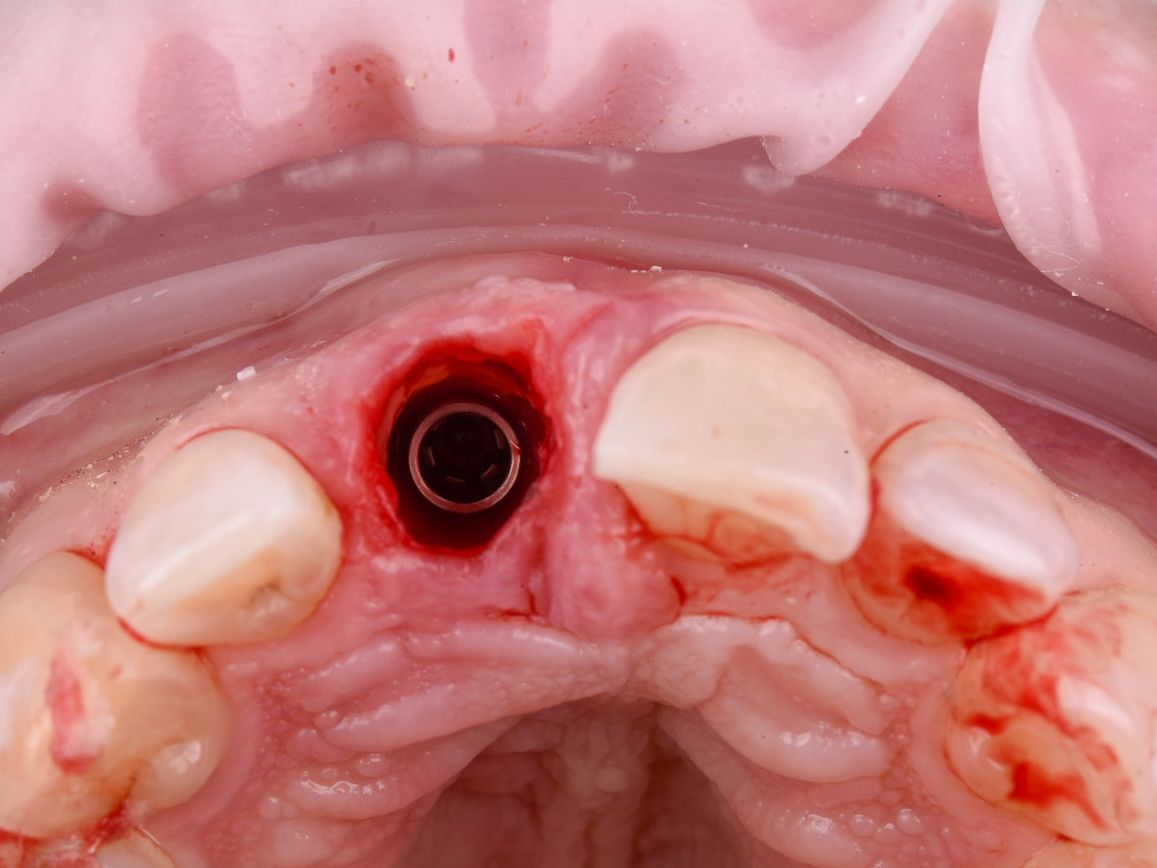
Unsure if your implant has a conical connection?
Telling the difference between these connections is easy. Look down into the implant platform. If you see a hexagon, it's an internal hex. If you see a circle, it's a conical.
Note — Implant reps have been trained to tell you, "our implant has a tapered connection down to the hex." This is NOT a conical connection. This is typically a 0.5mm taper that helps to slightly improve the internal hex. It still does not stand up to conical connection stability.
Not All Conical Connections are Equal
"Conical connection" is a design category, not a single standard — and quality within the category varies. Four factors determine how well a conical connection actually performs:
When evaluating systems, these are the questions worth asking — not what the marketing says, but what the geometry actually is.
The Antibacterial Gel Misconception
A common practice among implant clinicians is placing chlorhexidine gel or antibiotic paste inside the implant connection prior to abutment seating — with the idea that reducing bacterial load at the interface will protect crestal bone.
The problem: it addresses the wrong mechanism.
Yes, the connection harbors bacteria. But the primary driver of crestal bone loss is micromovement, not bacterial colonization alone. A gel does nothing to reduce connection instability. It doesn't change the tolerance, the taper angle, or the locking mechanics. Whatever antimicrobial effect it provides is transient and fails to address the fundamental biologic driver.
If you want to protect crestal bone at the connection, choose a connection that doesn't move. That's the answer.
The Goal: Bone Above the Platform
When you combine a conical connection with platform switching and subcrestal placement, something remarkable becomes achievable: bone levels not just at the implant platform, but above it.
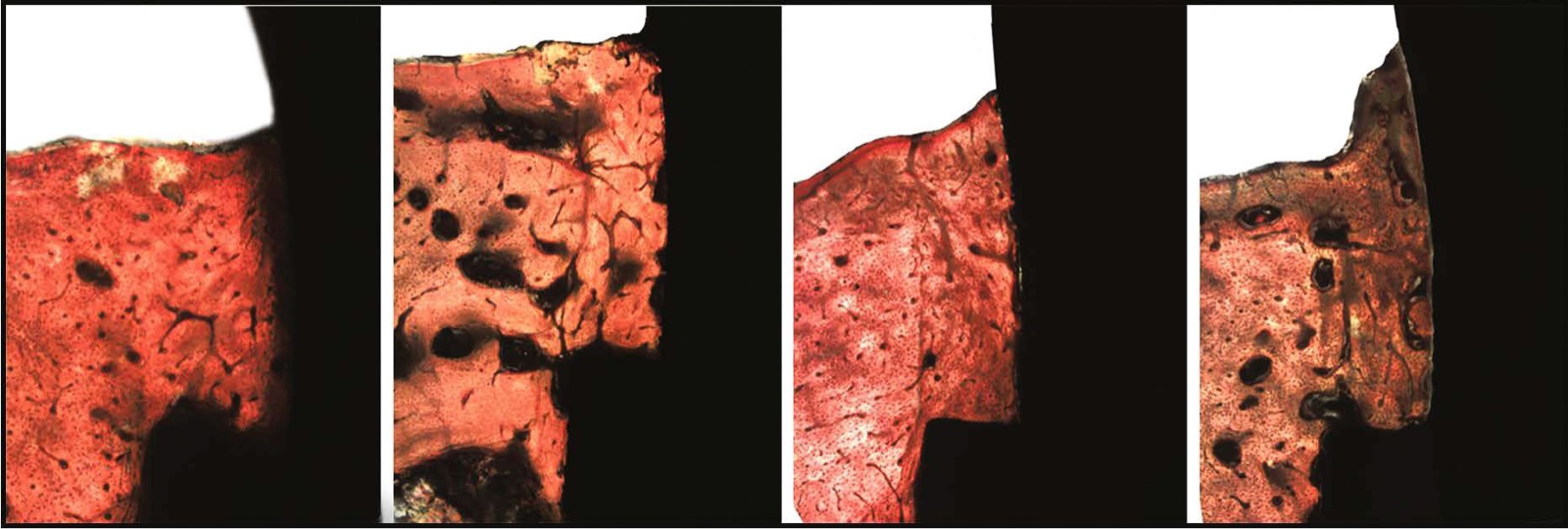
Degidi and colleagues found that all subcrestally placed implants in their cohort showed bone levels above the platform. A separate analysis found that 95% of subcrestally placed implants demonstrated supracrestal bone, with implants placed 2mm subcrestal maintaining approximately 1.5mm of bone coronal to the platform. Equicrestal implants, by contrast, showed marginal bone loss of 0.5–1.5mm — the expected result when you give the biology no room to work.
Bone above the platform is not a lucky outcome. It's a predictable one — when the connection is stable, the platform is switched, and the implant is placed at the right depth. That is the standard worth aiming for.
THE CLINICAL BOTTOM LINE
- Micromovement — not just bacteria — is the primary driver of crestal bone loss at the connection. Stability is the intervention.
- Flat-to-flat internal connections (internal hex) have micromovement built into their manufacturing tolerance. This is a design constraint.
- Conical connections eliminate this through taper geometry — friction increases under load, connection stabilizes rather than destabilizes.
- Not all conical connections are equal. Evaluate cone angle, connection depth, binding screw, and manufacturing tolerance.
- Antibacterial gel in the connection does not solve the problem. Choose a better connection instead.
- Platform switch on every case. Use abutments ≥1.5mm in height.
- Place bone-level conical implants 1–2mm subcrestal. With the right system and technique, bone above the platform is the expected outcome — not the exception.
Literature Spotlight
Camps-Font et al. Comparison of external, internal flat-to-flat, and conical implant abutment connections for implant-supported prostheses: A systematic review and network meta-analysis of randomized clinical trials. J Prosthet Dent. 2023
→ Direct comparison of connection geometries. Conical connections outperformed flat-to-flat designs on implant survival, marginal bone loss, and prosthetic complications. The definitive evidence for connection selection.
Atieh MA, Ibrahim HM, Atieh AH. Platform switching for marginal bone preservation: a systematic review and meta-analysis. J Periodontol. 2010;81(10):1350–1366.
→ Pooled analysis of 10 studies. Consistent, statistically significant reduction in marginal bone loss with platform switching. The foundational paper for understanding why connection positioning matters.
MORE FROM MISCH IMPLANT IQ
All issues: Misch Implant IQ archive
UPCOMING MISCH INSTITUTE COURSES
Fresh dates are posted as they're announced — see the full institute calendar at misch.com.
Full calendar and registration at misch.com.
References
1. Hermann JS, Buser D, Schenk RK, Cochran DL. Crestal bone changes around titanium implants. A histometric evaluation of unloaded non-submerged and submerged implants in the canine mandible. J Periodontol. 2000;71(9):1412–1424. · PubMed · DOI
2. Hermann JS, Schoolfield JD, Schenk RK, Buser D, Cochran DL. Influence of the size of the microgap on crestal bone changes around titanium implants. A histometric evaluation of unloaded non-submerged implants in the canine mandible. J Periodontol. 2001;72(10):1372–1383. · PubMed · DOI
3. Koutouzis T. Implant-abutment connection as contributing factor to peri-implant diseases. Periodontol 2000. 2019;81(1):152–166. · PubMed · DOI
4. Caricasulo R, Malchiodi L, Ghensi P, Fantozzi G, Cucchi A. The influence of implant-abutment connection to peri-implant bone loss: a systematic review and meta-analysis. Clin Implant Dent Relat Res. 2018;20(4):653–664. · PubMed · DOI
5. Camps-Font O, Rubianes-Porta L, Valmaseda-Castellón E, Jung RE, Gay-Escoda C, Figueiredo R. Comparison of external, internal flat-to-flat, and conical implant abutment connections for implant-supported prostheses: a systematic review and network meta-analysis of randomized clinical trials. J Prosthet Dent. 2023;130(3):327–340. · PubMed · DOI
6. Atieh MA, Ibrahim HM, Atieh AH. Platform switching for marginal bone preservation around dental implants: a systematic review and meta-analysis. J Periodontol. 2010;81(10):1350–1366. · PubMed · DOI
7. Strietzel FP, Neumann K, Hertel M. Impact of platform switching on marginal peri-implant bone-level changes. A systematic review and meta-analysis. Clin Oral Implants Res. 2015;26(3):342–358. · PubMed · DOI
8. Degidi M, Perrotti V, Shibli JA, Novaes AB, Piattelli A, Iezzi G. Equicrestal and subcrestal dental implants: a histologic and histomorphometric evaluation of nine retrieved human implants. J Periodontol. 2011;82(5):708–715. · PubMed · DOI
9. Spinato S, Stacchi C, Lombardi T, Bernardello F, Messina M, Zaffe D. Biological width establishment around dental implants is influenced by abutment height irrespective of vertical mucosal thickness: a cluster randomized controlled trial. Clin Oral Implants Res. 2019;30(7):649–659. · PubMed · DOI
10. Derks J, Tomasi C. Peri-implant health and disease. A systematic review of current epidemiology. J Clin Periodontol. 2015;42(Suppl 16):S158–S171. · PubMed · DOI
Misch Implant IQ · Educational content — not a substitute for individual clinical judgment.